
Preface
Welcome to my #introduction-information-security series. This series is written for beginners who are interested in #information-security and #cybersecurity. You do not need to have any knowledge in #computer-science to proceed with this series.
Those familiar with networking definitions can skip over to Confidentiality.
Networks: LAN, WAN & the Internet
A network is any group of connected devices that can communicate with each other. At a minimum, there must be at least 2 devices that are connected and can communicate to each other. A single computer cannot be a network, by definition.
Here, connection is an established transmission medium between devices. These can range from ethernet cables to radio waves. As long as data can be transferred and received, it is a connection.
LAN
A Local Area Network (LAN) defines a network of devices that are physically near each other. Devices connected in homes, schools, hospitals, offices, etc. are all examples of LANs. When two devices in a local area are connected, they create a LAN.
Before the internet became widely available, gamers used to rent out large social spaces like auditoriums, theatres, high-school gyms, cafes, etc. to host LAN parties by bringing their computers and connecting them all together to simulate what online multiplayer is today.

WAN
Much like a LAN, a Wide Area Network (WAN) defines a network of devices that connect locales to each other. Schools <-> Schools; Hospitals <-> Hospitals; Office A <-> Headquarters; City 1 <-> City 2 etc. An Internet Service Provider (ISP), creates a WAN by connecting many homes to their network, creating a network of LANs, which then connect to the GAN.
GAN (or the Internet)
A network of WANs is a Global Area Network: when two countries connect their WAN architecture together, they create a GAN. Moving forward, GAN will be referenced as the internet since that is what it is by definition.
In order to create the internet, multiple WANs must be connected together, and this is achieved by using fibre optic cables deep in the ocean that connect a WAN in one country to a WAN in another country.
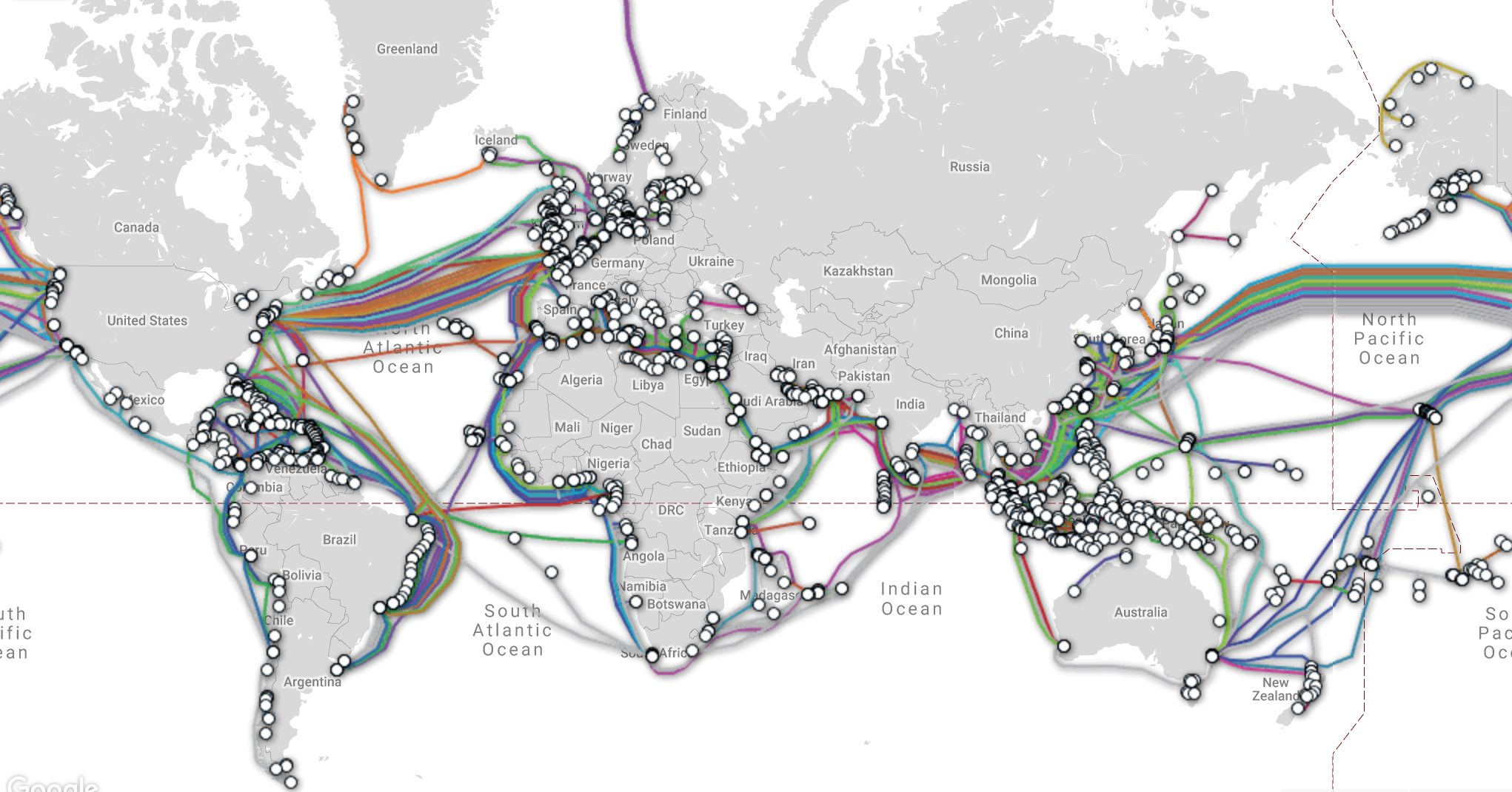
It is a misconception to assume that the internet is the same as Wi-Fi, and an even bigger misconception to assume the internet is only connected through satellites. Wi-Fi is a medium of transmission: it gives specifications to devices for how to communicate without a direct cable connection. It is not the internet, nor did it create the internet, nor does it define the internet.
The same goes for satellites: they are nodes that help relay traffic from one node to another. Technically, an internet could be created with satellites, but this would drastically slow down internet speeds and overload satellites to become unusable.
Confidentiality
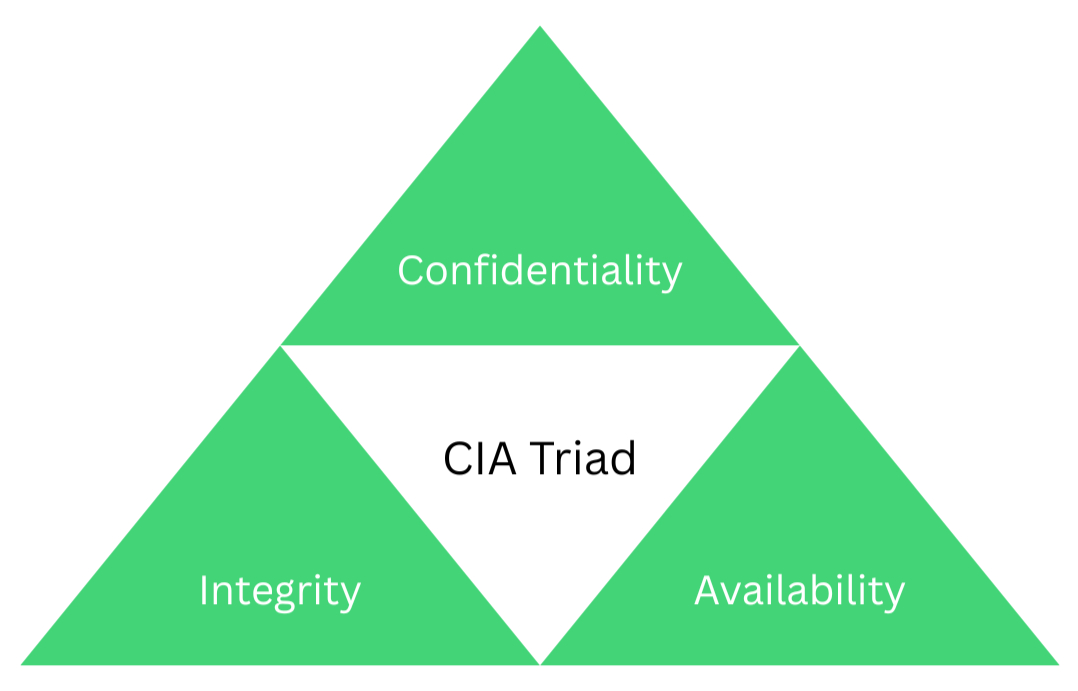
The C in the CIA triad stands for confidentiality: confidentiality ensures data is only accessed by authorised parties. It aims to prevent unauthorised parties from reading confidential data. All systems have to adhere to this in information security, such as keeping the encryption keys secret.
Integrity
Integrity aims to keep data consistent, accurate, original (i.e from the original source) and trustworthy. Integrity aims to prevent the modification, replication, insertion or fabrication of data. It also aims to keep the original source of the data, so that there is a party to be credited or blamed for the transmission of that data.
Availability
Availability aims to ensure authorised data is delivered to authorised parties when requested.
For example, Computer A has Bob’s passport. Availability ensures that, whenever Bob queries Computer A for his passport (with the right credentials), Computer A returns them to Bob without fail. If it fails in any way, it is violating availability.
Test Your Knowledge
- What is the difference between a LAN and a WAN?
Answer
A LAN (Local Area Network) is a network that connects computers within a local area, such as a home, school, or office building. A WAN (Wide Area Network) is a network that spans a large geographical area, such as a city and country.
- What is the difference between a WAN and the internet?
Answer
A WAN (Wide Area Network) is a network that spans a large geographical area, such as a city and country. The internet is a global network of interconnected WANs.
- What is the difference between the internet and Wi-Fi?
Answer
The internet is a global network of interconnected networks. Wi-Fi is a technology that allows devices to connect to a local area network (LAN) without the use of cables.
- What is the difference between the internet and satellites?
Answer
The internet is a global network of interconnected networks. Satellites are objects in space that can be used to relay data between different locations on Earth, but they are not the internet itself.
- Bob was able to intercept Alice’s message and modify it before it reached Alice. Which principle of the CIA triad did Bob violate?
Answer
Integrity, since he modified the message before it reached Alice.
- Alice’s computer was infected with ransomware, which encrypted all of her files and made them inaccessible to her. Which principle of the CIA triad did the ransomware violate?
Answer
Availability, since it made Alice’s files inaccessible to her.
Conclusion
The CIA triad specifies the three principles that a secure system should have as a bare minimum. It ensures that confidentiality is addressed and implemented to access data, that the data is consistent, unmodified, and trustworthy, and that the data is available to begin with.
In the next section, we will go over The OSI Security Architecture.